The Future of 3D Printing in Construction
Explore how 3D printing in construction speeds up processes, reduces costs, and enables custom designs for sustainable buildings.

Imagine a world where buildings rise from the ground in mere hours, with intricate designs and unparalleled precision. This is the future of construction, and it's happening right now with 3D printing technology.
The construction industry is on the brink of a revolution, as 3D printing transforms the way we build. From faster construction times and enhanced precision to reduced waste and costs, this innovative technology offers numerous benefits.
Here's what you'll discover:
- Real-world examples of 3D-printed structures that will amaze you
- The latest technological advancements in construction 3D printing
- How 3D printing can solve affordable housing shortages and promote sustainability
Brace yourself for a thrilling journey into the future of construction, where the possibilities are endless, and the only limit is our imagination. Thereyouhaveit3d.com is proud to be part of this exciting transformation.
How 3D Printing is Transforming the Construction Industry
3D printing technology is revolutionizing the building process and construction industry by offering several notable benefits:
- Faster and More Efficient Construction Process
-
3D printing enables the accelerated fabrication of building components, reducing construction time significantly.
-
Automated printing process minimizes human error and increases efficiency.
- Cost-Effectiveness and Reduced Waste
- 3D printing optimizes material usage, leading to less waste compared to traditional construction methods.
- Reduced labor costs due to automated printing process.
- Design Freedom and Customization Possibilities
- 3D printing allows for the creation of complex geometries and unique designs that are difficult or impossible with conventional construction techniques. With thereyouhaveit3d.com, you can explore endless possibilities for custom designs and intricate structures.
- Enables mass customization, allowing for personalized and adaptable building designs.
| Aspect | Traditional Construction | 3D Printed Construction |
|---|---|---|
| Speed | Slow and labor-intensive | Fast and automated |
| Cost | High material waste and labor costs | Optimized material usage and reduced costs of labor |
| Design | Limited by conventional techniques | Enables complex geometries and customization |
- 3D printing is transforming the construction industry by offering faster, more cost-effective, and highly customizable building solutions, paving the way for a more efficient and innovative future in construction.
Real-World Examples of 3D Printed Buildings and Structures
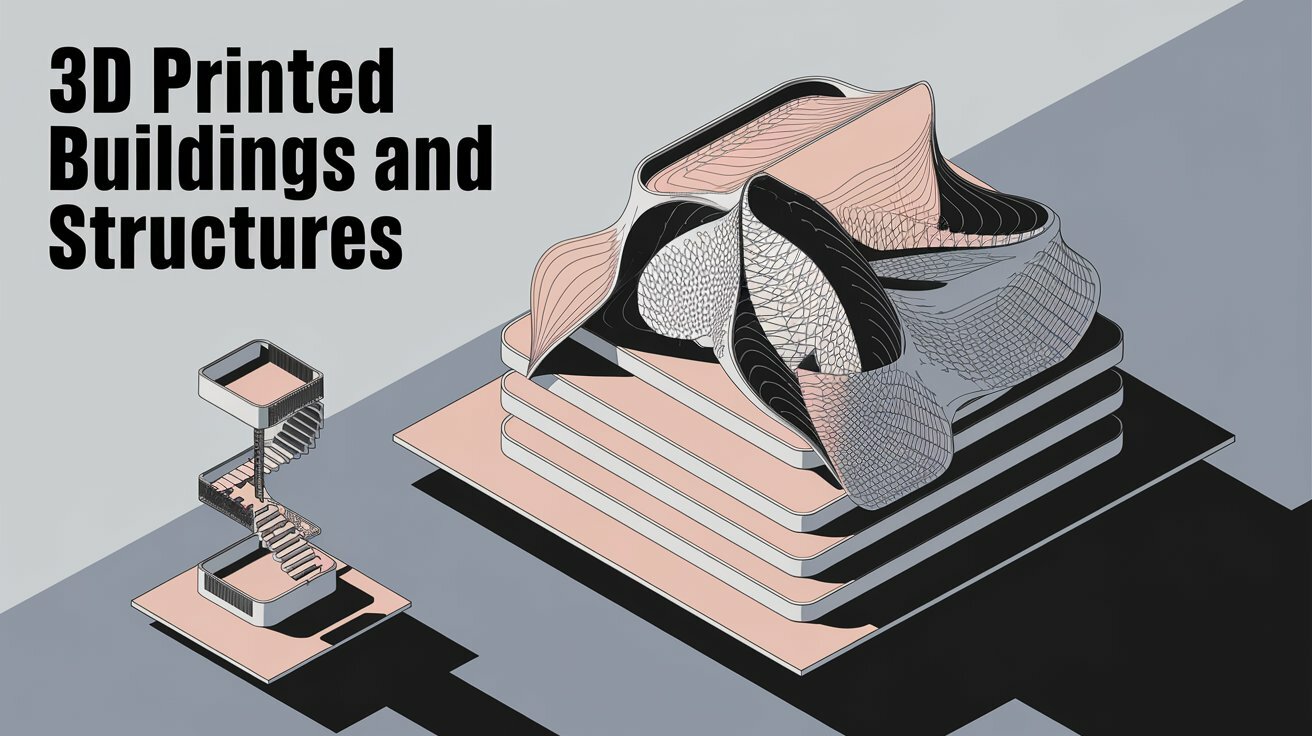
The world is witnessing a growing number of impressive 3D-printed buildings and structures. Here are some notable examples:
- Europe's First 3D-Printed House in Milan, Italy
-
Designed by Arup and CLS Architects
-
Built using a portable 3D printer in just 48 hours
Showcases the potential for fast, sustainable construction
- World's First 3D-Printed Steel Bridge in Amsterdam
- Designed by MX3D and Joris Laarman Lab
- Printed using industrial robotic arms and welding machines
- Demonstrates the possibilities of 3D printing with metal for infrastructure projects
3. Icon's 3D-Printed Houses in Texas, USA
- Developed by Icon, a construction technology company
- Built using Icon's Vulcan II 3D printer and proprietary concrete mix
- Aims to address housing shortages and provide affordable, sustainable homes
- India's First 3D-Printed Home at IIT-Madras Campus
- Collaborated project by IIT-Madras and Tvasta Manufacturing Solutions
- Constructed using a specialty concrete mix and a custom-built 3D printer
- Completed in just five days, demonstrating the speed and efficiency of 3D printing in construction
| Project | Location | Key Features |
|---|---|---|
| Europe's First 3D-Printed House | Milan, Italy | Rapid construction, sustainability |
| World's First 3D-Printed Steel Bridge | Amsterdam | Innovative use of metal 3D printing |
| Icon's 3D-Printed Houses | Texas, USA | Affordable housing solutions |
| India's First 3D-Printed Home | IIT-Madras Campus | Fast construction, custom materials |
These real-world examples showcase the incredible potential of 3D printing in construction, from rapid building times cost efficiency to innovative designs and sustainable solutions.
Technological Advancements in Construction 3D Printing
The field of construction 3D printing is rapidly evolving, with numerous technological advancements driving its growth and capabilities:
- Larger Printers for Increased Build Volumes
-
Development of larger, industrial-scale 3D printers
-
Enables the printing of bigger components and even entire buildings
-
Expands the possibilities for constructing large-scale structures
- Faster Printing Speeds and Improved Precision
-
Advancements in print head technology and motion control systems
-
Increases printing speed without compromising quality
-
Enhances the accuracy and precision of printed components
- Multi-Material Printing Capabilities
-
Printers capable of utilizing multiple materials in a single print
-
Allows for the creation of complex, multi-functional components
-
Enables the integration of reinforcement materials for improved structural integrity
- Specialized Materials for Construction
-
Development of printable concrete, geopolymers, and other construction-specific materials
-
Improved material properties, such as strength, durability, and thermal insulation
-
Specialized formulations like earthquake-resistant concrete for enhanced safety
| Advancement | Key Benefits |
|---|---|
| Larger Printers | Increased build volumes, enabling larger-scale projects |
| Faster Printing Speeds | Reduced construction time and improved efficiency |
| Multi-Material Printing | Creation of complex, multi-functional components |
| Specialized Materials | Enhanced structural properties and performance |
These technological advancements are pushing the boundaries of what is possible with 3D printing in construction, making it a more viable and attractive option for a wide range of building projects.
Global Adoption and Market Growth
The global adoption of 3D printing in construction is on the rise, with the market expected to experience significant growth in the coming years:
- Projected Growth of the Global 3D Construction Printing Market
-
The global 3D construction printing market is expected to reach $1.5 billion by 2024, growing at a CAGR of 33.8% from 2019 to 2024.
-
This growth is driven by the increasing market demand for faster, more efficient, and sustainable construction methods.
- Increasing Adoption by Construction Companies Worldwide
-
Major construction companies are investing in 3D printing technology to gain a competitive edge.
-
For example, Chinese construction firm WinSun has printed numerous buildings, including a 6-story apartment complex and a 1,100 square meter villa.
- Government Initiatives and Collaborations with Tech Startups
-
Governments are recognizing the potential of 3D printing in construction and are supporting its adoption through various initiatives.
-
For instance, Dubai's 3D Printing Strategy aims to have 25% of all buildings in the city constructed using 3D printing by 2030.
-
Collaborations between established construction firms and innovative tech startups are accelerating the development and implementation of 3D printing solutions.
| Region | Key Developments |
|---|---|
| North America | - Increasing adoption by major construction companies- Government support for 3D printing research and development |
| Europe | - European Space Agency's 3D printed lunar base project- Collaborations between universities and industry partners |
| Asia-Pacific | - China's leadership in 3D printed construction projects- Singapore's Housing and Development Board's 3D printing initiatives |
| Middle East | - Dubai's ambitious 3D Printing Strategy- Saudi Arabia's plans for 3D printed housing developments |
The global adoption of 3D printing in construction is gaining momentum, driven by the technology's potential to revolutionize the industry and the increasing support from governments and private construction sector stakeholders worldwide.
Benefits for Affordable Housing and Sustainable Construction
3D printing technology offers significant benefits for addressing housing shortages and promoting sustainable construction practices:
- Potential to Address Housing Shortages Efficiently
-
3D printing enables the rapid construction of affordable housing units
-
Reduced construction time allows for faster delivery of much-needed homes
-
Automated process helps meet the growing demand for housing in urban areas
- Improved Energy Efficiency and Thermal Insulation
-
3D-printed walls can be designed with complex geometries that enhance thermal insulation
-
Improved insulation reduces energy consumption for heating and cooling
-
Integration of energy-efficient features, such as solar panels or passive cooling systems, is easier with 3D printing
| Benefit | Traditional Construction | 3D Printed Construction |
|---|---|---|
| Speed of Construction | Slow, labor-intensive process | Fast, automated construction |
| Material Waste | High levels of waste due to cut-offs and excess materials | Minimal waste, as only necessary materials are used |
| Energy Efficiency | Limited by standard building designs and materials | Enhanced through optimized geometries and integrated features |
By leveraging the benefits of 3D printing, the construction industry can effectively address the urgent need for affordable housing while simultaneously promoting sustainable building practices and reducing the ecological impact of construction.
Challenges and Limitations
Despite the numerous benefits of 3D printing in construction, there are still several challenges and limitations that need to be addressed:
- High Upfront Costs
-
3D printing equipment for construction can be expensive, requiring a significant initial investment
-
Specialized materials used in construction 3D printing can also be costly compared to traditional building materials
- Limited Range of Printable Materials
-
While there have been advancements in material science, the range of printable materials suitable for construction is still limited
-
Most construction 3D printing relies on specialized concrete mixes, which may not be suitable for all applications
- Need for Skilled Workforce
-
Operating 3D printers and designing printable structures requires specialized skills and knowledge
-
Construction companies may need to invest in specialized training programs to upskill their workforce or hire experts in 3D printing technology
- Regulatory and Standardization Issues
- Building codes and regulations are still catching up with the rapid advancements in 3D printing technology
- Lack of standardized processes and quality control measures can lead to inconsistencies in the final printed structures
| Challenge | Description | Potential Solutions |
|---|---|---|
| High Upfront Costs | Expensive equipment and materials | - Collaborative investment models- Government incentives and subsidies |
| Limited Materials | Narrow range of printable materials suitable for construction | - Continued research and development in material science- Exploration of hybrid construction techniques |
| Skilled Workforce | Need for specialized skills and knowledge | - Investment in training programs- Collaboration with educational institutions |
| Regulatory Issues | Lack of standardized processes and quality control | - Development of industry-wide standards- Collaboration with regulatory bodies |
Addressing these challenges and limitations will be essential for the widespread adoption and success of 3D printing in the construction industry. As technology advances and more research is conducted, it is expected that many of these issues will be resolved, paving the way for a more efficient and sustainable future in construction.
Integration with Other Technologies

3D printing in construction is not a standalone technology; it can be integrated with various other technologies to enhance project collaboration, efficiency, and functionality:
- Building Information Modeling (BIM)
-
BIM software allows for the creation of detailed 3D models of buildings and structures
-
Integration of BIM with 3D printing enables seamless transfer of design data for accurate printing
-
Facilitates collaboration between architects, engineers, and construction professionals
- Augmented Reality (AR) and Virtual Reality (VR)
-
AR and VR technologies can be used to visualize 3D-printed structures before construction begins
-
Allows for virtual walkthroughs and design modifications in real-time
-
Enhances collaboration and decision-making processes
- Internet of Things (IoT) Sensors
-
Embedding IoT sensors into 3D-printed components enables real-time monitoring of structural health and performance
-
Sensors can detect stress, temperature, humidity, and other factors
-
Enables predictive maintenance and improves overall building safety and efficiency
- Automation and Robotics
-
Integration of 3D printing with automated robotic systems streamlines the construction process
-
Robots can handle tasks such as material handling, post-processing, and assembly
-
Increases efficiency, reduces labor costs, and minimizes human error
| Technology | Benefits of Integration with 3D Printing |
|---|---|
| BIM | - Seamless transfer of design data- Enhanced collaboration between stakeholders |
| AR/VR | - Visualization of structures before construction- Real-time design modifications and walkthroughs |
| IoT Sensors | - Real-time monitoring of structural health- Predictive maintenance and improved safety |
| Automation and Robotics | - Streamlined construction process- Increased efficiency and reduced labor costs |
By integrating 3D printing with these complementary technologies, the construction industry can unlock new possibilities for design, collaboration, and functionality, resulting in smarter, more sustainable buildings and efficient structures.
Future Outlook and Predictions
The future of 3D printing in construction is promising, with several exciting developments and predictions on the horizon:
- Increased Market Share
-
The market share of 3D printing in the construction industry is expected to grow significantly in the coming years
-
Estimates suggest that 3D printing could account for up to 10% of the global construction market by 2025
- Mass Customization and Complex Designs
-
3D printing will enable the mass customization of buildings and structures, allowing for unique and personalized designs
-
Architects and designers will have greater freedom to create complex, organic shapes and geometries that were previously impossible or cost-prohibitive
- Sustainable Construction Practices
-
3D printing will contribute to more sustainable construction practices by reducing construction waste and minimizing the ecological impact of building projects
-
The use of sustainable materials and the ability to optimize designs for energy efficiency will make 3D-printed structures more sustainable
- Advancements in Materials Science
-
Continued research and development in materials science will lead to the creation of stronger, more durable, and sustainable printable materials
-
The introduction of self-healing concrete and other cutting-edge materials will enhance the longevity and resilience of 3D-printed structures
| Aspect | Current State | Future Prediction |
|---|---|---|
| Market Share | Limited adoption | Up to 10% of global construction market by 2025 |
| Design Possibilities | Constrained by traditional methods | Mass customization and complex geometries |
| Sustainability | Significant waste and ecological impact | Reduced waste and improved energy efficiency |
| Materials | Limited range of printable materials | Advanced, sustainable, and self-healing materials |
As 3D printing technology continues to advance and become more widely adopted in the construction industry, we can expect to see a future where buildings are not only faster and cheaper to construct but also more customized, sustainable, and resilient than ever before.
3D printing is revolutionizing the construction industry, offering faster, more efficient, and sustainable building solutions. From real-world examples to technological advancements and global adoption, the evidence is clear: 3D printing is the future of construction.
- Embrace the potential of 3D printing to transform the way we build
- Explore the benefits, challenges, and exciting possibilities discussed in this article
- Be part of the revolution that will shape the construction industry for years to come
The future of construction is here, and it's time to embrace it with open arms.